
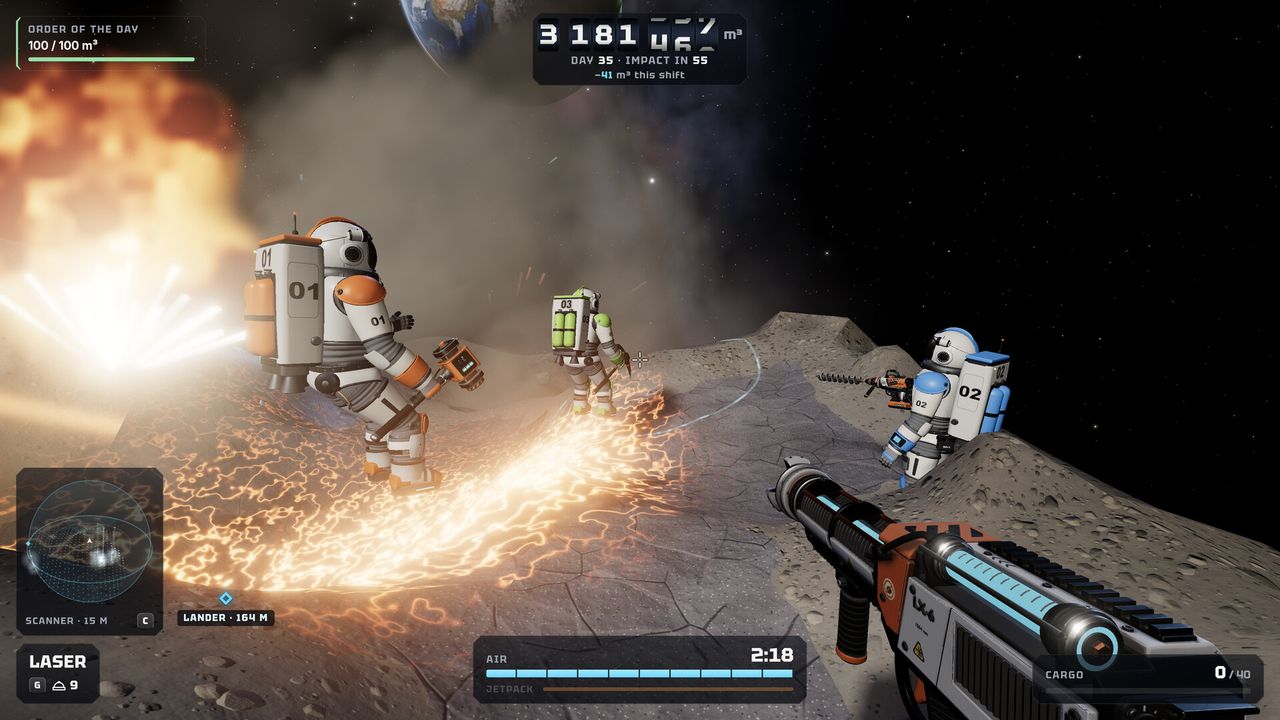
What the Sledgehammer Changes
The sledgehammer hits harder than the pickaxe and clears rock in fewer swings. It does not change the loop; it changes how much of the loop fits inside one air bar.
That is the correct kind of upgrade for the early game. You are not buying a new mechanic, you are buying more output per shift, which compounds into faster upgrades later.
Price and Timing
In the footage we reviewed the sledgehammer was listed at $500, with a drill at $2,000 and the starting pickaxe free. Treat those numbers as a snapshot of the launch build, not a permanent price list.
The right time to buy is when $500 does not delay an air tank upgrade. If buying it means spending a week with a short air bar, buy the air first.
A practical trigger: when your hold is filling but the air bar is still above half, you have enough digging speed. When the air bar is the limit, buy air instead.
Sledgehammer vs a Maxed Pickaxe
A heavily upgraded pickaxe can match early sledgehammer output, but it costs more in total and delays the step to the drill. The sledgehammer resets your upgrade curve at a higher floor.
The exception is if you have already invested deep in pickaxe stats. In that case, finish the run you are on and buy the sledgehammer when the next tier of rock appears.
What Comes After
The drill is the next step at $2,000, followed by the laser and plasma cutter. Each step increases output and therefore increases the value of air and cargo upgrades.
Do not skip tiers. The price jumps are sized to the ore income of the tier below, and skipping usually means a week of short shifts.
Is It Worth It?
Yes, if your bottleneck is digging speed. No, if your bottleneck is air, cargo, or the walk home. The sledgehammer is the cheapest way to test whether speed is your problem.
If you buy it and your day rate does not improve, the bottleneck was never the tool. Spend the next credits on air and the tether.